
Agilent 6890 vs 7890 GC: Which Gas Chromatograph Should Your Lab Buy?
5th Oct 2026
Agilent 6890 vs 7890 GC: Which Gas Chromatograph Is Right for Your Lab?
The Agilent 6890 remains an excellent value for laboratories running established GC methods, routine FID analysis, environmental testing, hydrocarbon analysis, teaching applications and research workflows where proven performance matters more than having the newest instrument platform.
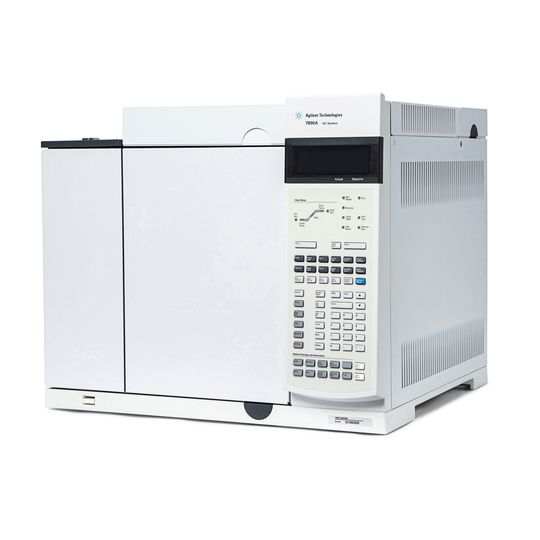
The Agilent 7890 is generally the better choice for laboratories that need higher throughput, newer automation, expanded inlet and detector flexibility, modern diagnostics, advanced gas-flow control or easier integration into contemporary regulated and GC-MS workflows.
A used 6890 can therefore be the better purchase for a laboratory that needs a dependable GC at a lower capital cost, while a 7890 often makes more sense when productivity, newer software support and long term platform flexibility justify the additional investment.
Key Takeaways
- Agilent 6890: proven, widely used and often one of the strongest values on the used GC market.
- Agilent 7890: newer architecture with expanded automation, diagnostics, inlet options and advanced flow-path capabilities.
- Many established 6890 methods can be transferred to the 7890 platform, which can simplify upgrades.
- Both platforms support common GC detectors such as FID and TCD depending on configuration.
- The 7890 platform introduced stronger compatibility with technologies such as Capillary Flow Technology and multimode inlet configurations.
- For routine GC-FID work, a properly configured 6890 may still provide all the performance a laboratory actually needs.
- For high throughput GC-MS, regulated environments or laboratories planning long-term expansion, the 7890 generally offers the stronger platform.
- When buying used, the actual configuration matters more than the model number alone. Detector, inlet, autosampler, data system and included software can dramatically change the value of the system.
Why the Agilent 6890 vs 7890 Comparison Still Matters
Agilent gas chromatographs have become standard equipment in pharmaceutical, environmental, petrochemical, chemical, food, forensic and academic laboratories.
Two of the most recognizable platforms are the Agilent 6890 Series GC and the later Agilent 7890 Series GC.
The 7890 was developed as a successor to the 6890 family, but that does not make the older instrument obsolete for every laboratory.
In fact, the used equipment market creates an interesting purchasing decision.
A laboratory may be able to acquire a fully functional 6890 with detector, computer and software for significantly less than a newer GC system while still running the exact analytical method it needs.
At the same time, another laboratory may rely on:
- high sample throughput
- modern autosamplers
- advanced GC-MS configurations
- complex gas-flow switching
- newer chromatography data systems
- strict compliance requirements
For that laboratory, moving to the 7890 platform may be the more practical long term choice.
HiTechTrader currently carries multiple Agilent chromatography configurations and regularly handles both 6890 and 7890 family instruments.
Browse: current gas chromatograph inventory or Agilent equipment at HiTechTrader .
Agilent 6890 vs 7890: Quick Comparison
| Feature | Agilent 6890 | Agilent 7890 |
|---|---|---|
| Platform generation | Older proven GC platform | Newer successor platform |
| Best fit | Routine analysis, established methods, budget conscious laboratories | Higher throughput, newer workflows, advanced automation and GC-MS |
| Electronic pneumatics | Electronic Pneumatic Control available | Newer generation EPC architecture |
| FID | Widely available | Widely available |
| TCD | Available | Available |
| Other detector options | Configuration dependent | Broader later generation configuration options |
| Method transfer | Established method platform | Designed to support transfer of many 6890 methods |
| Capillary Flow Technology | More limited depending on configuration | Strong platform support |
| Multimode inlet | Not a defining 6890 feature | Available on the 7890 platform |
| Automation | Strong legacy autosampler support | Newer automation architecture |
| Diagnostics | More traditional instrument monitoring | More advanced monitoring and diagnostic capabilities |
| Used acquisition cost | Usually substantially lower | Typically higher |
| Value for routine FID work | Excellent | Excellent, but may be more system than necessary |
| Long term platform flexibility | Good for established methods | Generally stronger |
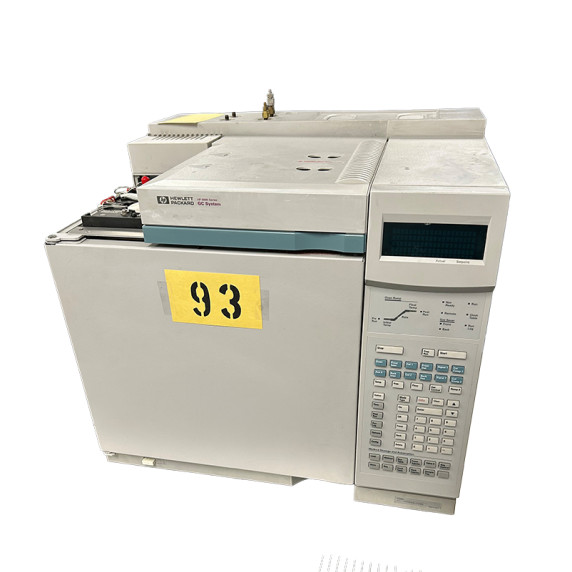
What Is the Agilent 6890 GC?
The Agilent 6890 Series gas chromatograph became one of the most widely recognized analytical GC platforms in laboratories around the world.
Its reputation was built around:
- stable oven temperature control
- electronic pneumatic control
- robust detector electronics
- reliable retention time reproducibility
- flexible inlet and detector configurations
- integration with Agilent ChemStation
The 6890 remains particularly attractive on the used market because many laboratories already have:
- validated methods developed on the platform
- trained staff
- compatible columns
- existing autosamplers
- replacement parts
- historical analytical data
For a laboratory that simply needs reliable gas chromatography, replacing an established 6890 method with an entirely different analytical platform may provide little benefit.
Current Agilent 6890 GC at HiTechTrader
HiTechTrader currently carries a:
Agilent Networked 6890 GC with FID and ChemStation A10 Computer .
This system is configured as a GC-FID platform and includes:
- Agilent 6890 Networked GC
- Flame Ionization Detector
- Electronic Pneumatic Control
- computer workstation
- ChemStation A10 software
It is particularly attractive for laboratories performing:
- hydrocarbon analysis
- solvent testing
- volatile organic compound analysis
- routine chemical analysis
- teaching and method development work
What Is the Agilent 7890 GC?
The Agilent 7890 Series was designed as the next major generation after the 6890 platform.
Agilent retained many characteristics familiar to existing 6890 users while adding capabilities aimed at:
- higher laboratory productivity
- more sophisticated GC configurations
- advanced flow control
- faster method cycling
- stronger automation
- improved diagnostics
- newer GC-MS configurations
This was strategically important because laboratories could move to a newer platform without abandoning everything they had learned from the 6890.
Agilent specifically promoted straightforward method transfer from the 6890 to the 7890 family.
Current 7890 Equipment at HiTechTrader
HiTechTrader's current analytical inventory includes an:
Agilent 7890 / 5977 GC-MS system with G4515A autosampler .
This illustrates one of the strongest reasons laboratories move toward the 7890 platform: its use as the GC front end for more modern GC-MS systems.
HiTechTrader also frequently stocks 6890 and 7890 series instruments and components through its:
Is the Agilent 6890 Still Good?
Yes, provided the application matches the instrument.
A properly maintained and appropriately configured 6890 can still be an excellent analytical platform for routine gas chromatography.
The instrument did not suddenly lose its chromatographic capability because a newer model was introduced.
If a laboratory needs:
- reliable FID detection
- routine organic analysis
- established validated methods
- manual injection
- moderate throughput
- a lower acquisition cost
a used 6890 can offer exceptional value.
Where the Agilent 7890 Has the Advantage
The 7890 becomes increasingly attractive as the workflow becomes more complex.
More advanced electronic pneumatics
Precise gas-flow control is fundamental to reproducible chromatography.
The 7890 platform introduced newer generation electronic pneumatics designed to improve control and support more sophisticated flow configurations.
Capillary Flow Technology
Agilent's Capillary Flow Technology can support advanced gas-flow manipulation inside the GC.
Depending on configuration, this can enable workflows involving:
- backflush
- column switching
- flow splitting
- multidimensional GC
- detector switching
These capabilities are particularly useful in complex analytical methods.
More advanced inlet options
The 7890 platform supports newer inlet technology including Agilent's multimode inlet.
Depending on configuration, this can increase flexibility for:
- split injection
- splitless injection
- temperature programmed injection
- large volume injection
Faster analytical cycling
Newer oven design and system improvements can reduce the amount of time required between analytical runs.
That may not matter much in a research lab performing ten samples per week.
It can matter enormously in a production laboratory running hundreds of injections.
More advanced diagnostics
Later generation GC platforms offer stronger instrument monitoring and diagnostics.
In high-throughput laboratories, discovering a maintenance problem before an entire sample sequence fails can justify a substantial equipment premium.
6890 vs 7890 for Routine GC-FID Analysis
If the primary requirement is routine FID analysis, the 6890 remains extremely competitive.
The Flame Ionization Detector is widely used because it provides:
- excellent response to many organic compounds
- high sensitivity
- wide linear dynamic range
- stable quantitative performance
- relatively straightforward operation
Typical GC-FID applications include:
- hydrocarbon analysis
- petrochemical testing
- solvents
- volatile organic compounds
- fatty acid analysis
- fuel analysis
- environmental testing
- routine quality control
For these applications, the analytical result may not improve simply because the GC chassis is newer.
A good 6890 with the correct inlet, detector, column and data system may be the more economical choice.
6890 vs 7890 for GC-MS
The buying decision changes when mass spectrometry becomes part of the system.
HiTechTrader currently carries a:
6890 / 5975 GC-MS system with G4515A autosampler .
This configuration demonstrates that the 6890 can still form the GC foundation of a highly capable GC-MS platform.
The current system combines:
- Agilent 6890 GC
- Agilent 5975 mass selective detector
- FID
- G4515A automatic liquid sampler
- computer and software
For laboratories that need both compound identification and quantitative FID data, a system like this can provide considerable analytical capability.
The 7890, however, is the more natural platform when pairing with later-generation mass spectrometers such as the 5977 family.
6890/5975 vs 7890/5977
| Configuration | 6890 / 5975 | 7890 / 5977 |
|---|---|---|
| Capital cost on used market | Generally lower | Generally higher |
| Established legacy methods | Excellent | Excellent with appropriate transfer |
| Modern GC architecture | Older generation | Newer generation |
| Later generation MSD integration | 5975-era platform | Natural pairing with 5977 family |
| Budget-sensitive laboratories | Very attractive | Higher initial investment |
| Long term high throughput workflow | Capable | Generally stronger platform |
Can You Transfer an Agilent 6890 Method to a 7890?
In many cases, yes.
Method compatibility was one of the important design considerations when laboratories began moving from the 6890 to the 7890 platform.
Agilent specifically documented direct method-transfer compatibility between the platforms.
That can include familiar:
- column formats
- inlet configurations
- detector technologies
- temperature programs
- gas-flow methods
However, method transfer should still be validated.
Even if the instrument parameters appear identical, laboratories in regulated environments should confirm:
- retention times
- resolution
- peak area
- precision
- linearity
- detection limits
before treating the new system as analytically equivalent.
Do the 6890 and 7890 Use the Same Columns?
Many standard capillary GC columns and supplies can be used across both platforms when the instrument configuration is compatible.
This is one reason upgrading can be less disruptive than moving to an entirely different analytical architecture.
The analytical column itself should still be chosen based on:
- stationary phase
- column length
- internal diameter
- film thickness
- target compounds
- temperature range
The GC chassis does not determine column selectivity.
6890 vs 7890 Detector Options
Detector configuration is one of the most important factors when comparing used gas chromatographs.
Possible detectors across these platforms can include:
- FID — Flame Ionization Detector
- TCD — Thermal Conductivity Detector
- ECD — Electron Capture Detector
- NPD — Nitrogen Phosphorus Detector
- FPD — Flame Photometric Detector
- mass selective detector when configured as GC-MS
Later-generation 7890 configurations support additional detector and system possibilities depending on instrument version and setup.
FID vs TCD: Which Detector Do You Need?
Choose FID when:
- you primarily analyze organic compounds
- hydrocarbons are important
- high quantitative sensitivity is needed
- a broad linear response range is valuable
Choose TCD when:
- you need a more universal concentration sensitive detector
- permanent gases may be analyzed
- the analyte does not respond strongly to FID
The detector requirement can matter more than whether the GC is a 6890 or 7890.
What About Autosamplers?
Automation can dramatically change laboratory throughput and repeatability.
The current standalone HiTechTrader 6890 GC is configured primarily for manual injection, although legacy autosampler integration is possible.
The current HiTechTrader 6890/5975 GC-MS system includes a G4515A automatic liquid sampler.
Newer 7890 configurations are commonly paired with later Agilent autosampler architectures.
Manual injection may be perfectly adequate for:
- teaching laboratories
- method development
- research
- low sample volumes
- occasional GC use
Autosampling becomes much more important for:
- production QC
- overnight sequences
- high sample counts
- regulated testing
- repeatability critical methods
Software May Decide the Purchase
Software is one of the most overlooked factors when purchasing used analytical instrumentation.
A GC may be mechanically excellent while still being difficult to deploy if:
- the original workstation is missing
- the data system is unavailable
- communications hardware is obsolete
- the operating system is incompatible
- the laboratory requires a specific CDS version
That is why a complete used system with a working computer and configured software can be substantially more valuable than an instrument chassis by itself.
The current HiTechTrader Networked 6890 listing includes a computer with ChemStation A10.
Is ChemStation Still Useful?
For established GC methods, ChemStation remains familiar to many chromatography laboratories and supports core tasks such as:
- instrument control
- method development
- data acquisition
- peak integration
- quantification
- reporting
The question is not simply whether the software works.
A laboratory should consider:
- IT requirements
- data backup
- network security
- regulatory requirements
- operating system support
- future computer replacement
Which GC Is Better for a Regulated Laboratory?
For a highly regulated pharmaceutical or production environment, the 7890 generally has the stronger long-term case.
Reasons may include:
- newer software compatibility
- more advanced diagnostics
- newer automation
- better alignment with current qualification procedures
- longer expected support horizon
That does not mean a 6890 cannot be used in a regulated environment.
Many validated methods have historically run on the platform.
The important question is whether the laboratory can support, qualify and maintain the complete hardware and software system over the required period.
Which GC Is Better for a Teaching Laboratory?
The 6890 can be an excellent option.
Students can learn:
- gas chromatography fundamentals
- manual injection
- retention time
- temperature programming
- carrier gas flow
- FID operation
- peak integration
- quantitative analysis
without the institution investing in the newest analytical platform.
Which GC Is Better for Environmental Analysis?
Either can work extremely well depending on detector and sample-introduction configuration.
Environmental GC applications can include:
- VOCs
- SVOCs
- hydrocarbons
- pesticides
- solvents
- water analysis
- soil extracts
A laboratory running an established method may gain little by replacing a functioning 6890 solely because of instrument age.
A laboratory building a new high throughput environmental workflow may prefer the 7890 for longer-term flexibility and automation.
Which GC Is Better for Petrochemical Analysis?
Both platforms have strong applications in petrochemical and hydrocarbon analysis.
FID is particularly useful because of its strong response to hydrocarbons and broad quantitative range.
For routine fuel, solvent or hydrocarbon testing, a well configured 6890 can still represent excellent value.
More complex multidimensional gas-flow configurations may favor the 7890.
Can the 6890 and 7890 Use Hydrogen Carrier Gas?
Agilent currently identifies both the 6890 and 7890 Series GC platforms as capable of using alternative carrier gases such as hydrogen when the specific inlet, detector, method and safety configuration are appropriate.
Carrier gas conversion is not simply a matter of changing the cylinder.
Laboratories should evaluate:
- method performance
- flow rates
- column conditions
- detector compatibility
- safety requirements
- GC-MS implications
6890 vs 7890 for a New Laboratory
For a new laboratory, the decision often comes down to budget versus future expansion.
Buy the 6890 if:
- capital budget is limited
- the required method is well established
- FID or another basic detector meets the need
- sample throughput is modest
- you want proven GC capability at lower cost
Buy the 7890 if:
- you expect sample volume to grow
- advanced automation matters
- GC-MS is central to the lab
- newer software compatibility is important
- complex inlet or flow configurations may be needed
- the instrument will support regulated production work for years
6890 vs 7890 Used-GC Buying Checklist
- Confirm the exact GC model and revision.
- Identify every installed inlet.
- Identify every detector.
- Determine whether those detectors are included in the sale.
- Confirm Electronic Pneumatic Control configuration.
- Inspect the oven and door.
- Check inlet heaters.
- Check detector heaters.
- Confirm gas-flow control operates properly.
- Verify communication with the workstation.
- Confirm software is included.
- Confirm software licensing status.
- Determine whether the computer is included.
- Confirm autosampler compatibility.
- Inspect injection tower and tray if included.
- Verify the column is included only if specifically stated.
- Check electrical requirements.
- Ask what tests were performed.
- Confirm warranty terms.
What Matters More Than the Model Number?
Configuration.
Consider two hypothetical systems:
System A: Agilent 7890 chassis with no detector, no autosampler and no computer.
System B: Agilent 6890 with FID, network communication, computer and configured ChemStation.
For a lab that needs routine GC-FID analysis immediately, the older system may be vastly more useful.
The same logic applies in reverse.
A fully configured 7890/5977 GC-MS may provide analytical capabilities that a basic standalone 6890 simply cannot match.
Should You Replace a Working Agilent 6890?
Not automatically.
If the instrument:
- passes system suitability
- produces reproducible retention times
- meets detection requirements
- remains serviceable
- works with your current software environment
there may be a strong economic case for continuing to use it.
Replacement becomes more compelling when:
- downtime is increasing
- parts availability becomes problematic
- IT can no longer support the workstation
- sample throughput has outgrown the system
- new methods require capabilities it does not have
- regulatory requirements favor a newer supported platform
Frequently Asked Questions
Is the Agilent 6890 obsolete?
The 6890 is a legacy GC platform, but many instruments remain useful for routine analytical work. Whether it is appropriate depends on method requirements, software support, serviceability and the specific instrument configuration.
Is the Agilent 6890 still worth buying?
Yes, particularly for routine FID analysis, established methods, teaching laboratories and laboratories seeking reliable gas chromatography at a lower acquisition cost.
Is the Agilent 7890 better than the 6890?
The 7890 is a newer and more capable platform overall, particularly for advanced automation, diagnostics, gas-flow configurations and newer GC-MS systems. That does not necessarily make it the better value for a simple routine GC method.
Can Agilent 6890 methods transfer to a 7890?
Many 6890 methods can be transferred to the 7890 because Agilent maintained significant method and consumable compatibility between the platforms. Laboratories should still validate analytical performance after transfer.
Do the 6890 and 7890 use the same GC columns?
Many conventional capillary GC columns are compatible with both instruments when the inlet and detector configuration supports them.
Can the Agilent 6890 use an autosampler?
Yes. 6890 systems can be configured with compatible Agilent and legacy autosampler equipment. The exact compatibility depends on the instrument and sampler configuration.
Can the Agilent 6890 use ChemStation?
Yes. ChemStation was widely used with 6890 systems for instrument control, acquisition, integration, quantification and reporting.
What detectors can an Agilent 6890 use?
Depending on configuration, the 6890 platform can support detectors including FID, TCD, ECD, NPD and others, as well as mass selective detection when incorporated into a GC-MS system.
What detectors can an Agilent 7890 use?
The 7890 supports multiple detector technologies and later-generation GC configurations. Exact detector compatibility depends on the specific 7890 model and instrument configuration.
What is the best detector for hydrocarbons?
FID is one of the most widely used detectors for hydrocarbon analysis because it provides strong sensitivity and a broad linear dynamic range for many organic compounds.
What is the difference between GC and GC-MS?
A GC separates compounds as they travel through a chromatographic column. GC-MS adds a mass spectrometer that can help identify compounds according to their mass spectra after separation.
Is a 6890/5975 GC-MS still useful?
Yes. A properly functioning 6890/5975 system can remain useful for many environmental, chemical, forensic and research applications, particularly when established methods and compatible software are already available.
Is a 7890/5977 better for GC-MS?
For laboratories seeking a newer Agilent GC-MS platform, the 7890 paired with a 5977-series MSD generally provides the stronger long term architecture.
Can an Agilent 6890 use hydrogen as carrier gas?
Agilent identifies the 6890 Series as capable of operating with hydrogen carrier gas in appropriate configurations. Methods and safety procedures should be properly converted and validated.
Should I buy a used 6890 or a used 7890?
Choose the 6890 when budget and established analytical capability are the priority. Choose the 7890 when newer automation, advanced flow control, GC-MS integration, software support or long-term platform flexibility are more important.
Current Agilent GC Equipment at HiTechTrader
- Agilent Networked 6890 GC with FID and ChemStation
- Agilent 6890 / 5975 GC-MS with G4515A Autosampler
- Agilent 7890 / 5977 and Other GC-MS Systems
- All Current Gas Chromatographs
Need Help Choosing Between an Agilent 6890 and 7890?
Send HiTechTrader the requirements of your analytical method:
- compounds being analyzed
- required detector
- sample throughput
- manual or automatic injection
- GC or GC-MS
- existing Agilent equipment
- software requirements
- carrier gas
- regulatory requirements
- budget
We can help determine whether a used 6890, 7890 or another Agilent GC configuration gives your laboratory the best combination of analytical capability and value.
Contact HiTechTrader About Agilent GC Systems
Or browse: current gas chromatograph inventory .