
Biosafety Cabinet vs Fume Hood vs Laminar Flow Hood Guide
6th Jul 2026
Biosafety Cabinets vs Fume Hoods vs Laminar Flow Hoods: What Does Your Lab Need?
Choosing between a biosafety cabinet, chemical fume hood, and laminar flow hood is one of the most important equipment decisions a laboratory can make. Each piece of equipment is designed for a different type of protection, and using the wrong enclosure can create safety risks, contamination problems, or failed compliance reviews.
HiTechTrader supplies used containment and safety equipment, laboratory hoods, Flow Science containment products, and Baker biosafety cabinet listings for chemical, biological, academic, pharmaceutical, and industrial labs.
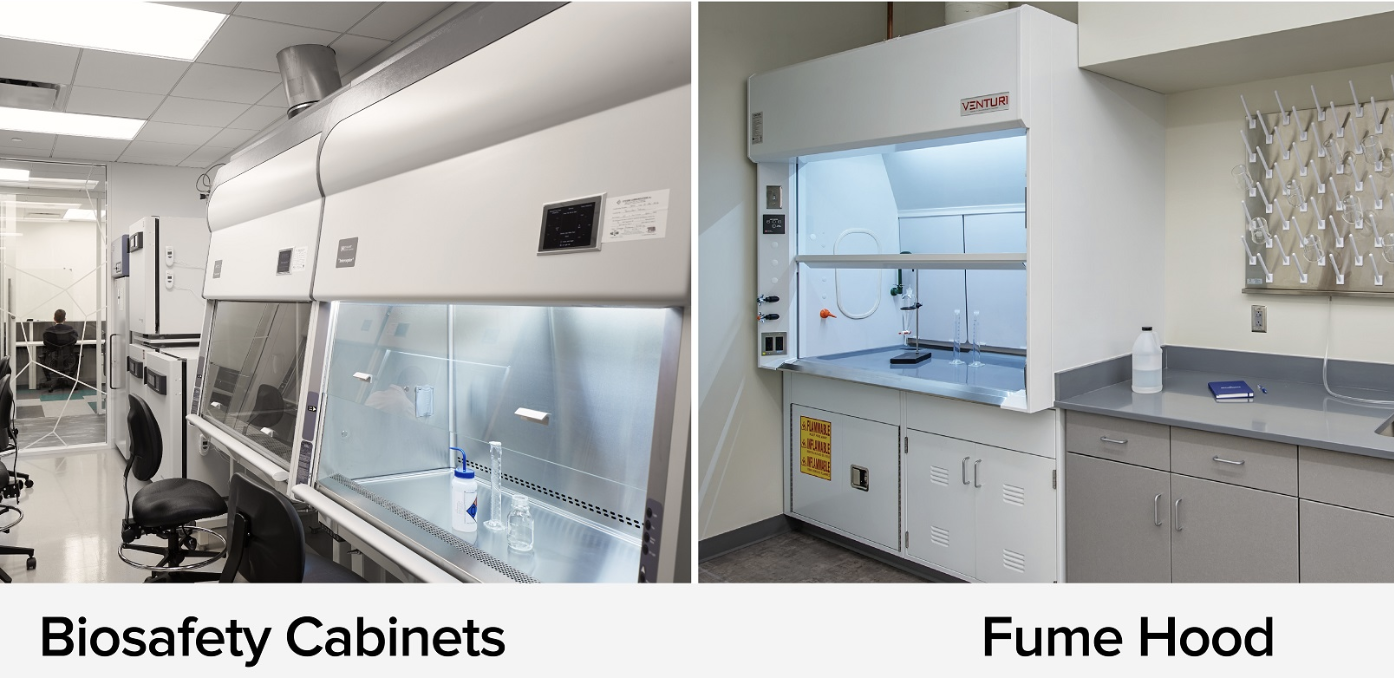
What Is a Chemical Fume Hood?
A chemical fume hood is designed primarily to protect users from chemical vapors, fumes, and airborne contaminants generated during chemical work. It typically draws air away from the user and exhausts it through ductwork.
Chemical fume hoods are commonly used for:
- Solvent handling
- Acid work
- Chemical synthesis
- Distillation
- Evaporation
- Reflux
- Flash chromatography
Labs handling chemical vapors should start by reviewing available laboratory hoods and Flow Science products.
What Is a Biosafety Cabinet?
A biosafety cabinet, or BSC, is designed for biological work. A Class II biosafety cabinet helps protect personnel, samples, and the environment through controlled airflow and HEPA filtration.
Biosafety cabinets are commonly used for:
- Cell culture
- Microbiology
- Clinical diagnostics
- Biotech research
- Pharmaceutical microbiology
- Life science research
For example, the Baker SterilGARD e3 SG604 Biosafety Cabinet is a Class II Type A2 biosafety cabinet designed for biological containment and sterile workflows.
What Is a Laminar Flow Hood?
A laminar flow hood is generally designed to protect the product or sample, not necessarily the operator. It provides clean filtered airflow across the work area and is often used for non-hazardous sterile work.
Laminar flow hoods may be used for:
- Sterile assembly
- Non-hazardous sample preparation
- Clean bench operations
- Electronics work
- General clean airflow needs
A laminar flow hood should not be used for hazardous chemical vapors or infectious biological aerosols unless the equipment is specifically designed and certified for that use.
Quick Comparison
A chemical fume hood protects the user from chemical vapors. A biosafety cabinet protects personnel, product, and the environment during biological work. A laminar flow hood primarily protects the product from contamination.
If your lab handles chemicals, start with a fume hood or chemical containment enclosure. If your lab handles biological agents or cell culture, evaluate a biosafety cabinet. If your lab only needs clean airflow for non-hazardous product protection, a laminar flow hood may be appropriate.
Related Equipment from HiTechTrader
Browse these related categories:
- Containment and safety equipment
- Laboratory hoods
- Flow Science containment products
- Baker biosafety cabinet listings
- Baker SterilGARD e3 SG604 Biosafety Cabinet
A biosafety cabinet protects personnel, product, and environment during biological work. A chemical fume hood protects users from chemical vapors and fumes. A laminar flow hood primarily protects samples from contamination and should not be used for hazardous vapors or biological aerosols unless specifically designed for that purpose.
Not sure whether your lab needs a chemical fume hood, Flow Sciences hood, biosafety cabinet, or clean bench? Start with HiTechTrader’s containment and safety equipment category or contact the team for help matching equipment to your workflow.