
The Alchemy of Scale
Posted by HTT Magazine on 4th Feb 2026
Where Laboratory Meets Plant Floor
In the quiet, controlled world of a medicinal chemistry lab, success is measured in milligrams. A brilliant crystalline powder sits in a vial, a testament to molecular design. But for that molecule to become medicine, for that catalyst to transform an industry, it must undergo a metamorphosis of almost mythical proportions. It must survive the journey from milligrams to metric tons, from round-bottom flask to reactor vessel.
This is the domain of process chemistry: not merely scaling up, but re-imagining chemistry for the real world.
This is where the elegant becomes the economical, the pure becomes the practical, and the chemist becomes an engineer, an environmentalist, and an artist all at once.
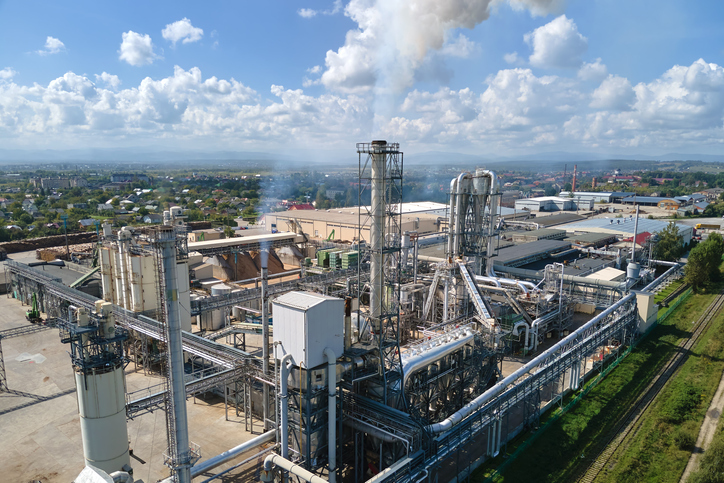
The Orchestra of Scale: More Than a Bigger Flask
Scaling a reaction by a factor of 100,000 is not a linear exercise. It is a fundamental re-engineering of the chemical universe. Phenomena negligible at the bench become dominant forces on the plant floor.
Heat, for instance, becomes a new beast. An exothermic reaction that gently warms a 50 mL flask can, in a 10,000-liter reactor, unleash thermal energy equivalent to a small explosion if not carefully controlled. Process chemists must design inherently safer protocols switching solvents, altering addition rates, or even re-engineering reaction pathways to manage the heat of reaction.
Mixing presents another frontier. In a lab, a magnetic stir bar creates a homogenous vortex. In a vast tank, ensuring every molecule of reagent A finds its partner molecule B requires sophisticated impeller design and a deep understanding of fluid dynamics. A single mixing “dead zone” can become a factory for impurities.
The goal is no longer simply yield and purity, but a trinity of objectives: safety, efficiency, and robustness. A process must run the same way on Monday in Singapore as it does on Friday in Ohio, regardless of humidity shifts or raw material variations.
The Modern Toolkit: Data, AI, and Continuous Flow
Modern process chemists no longer rely solely on empirical scale-up. They are supported by a powerful digital toolkit:
-
High-Throughput Experimentation (HTE): Automated micro-reactors screen hundreds of reaction conditions rapidly, identifying optimal catalysts, solvents, and temperatures with statistical rigor.
-
Process Analytical Technology (PAT): Inline probes act as the “eyes and ears” inside reactors, using spectroscopy to monitor concentration, particle size, and polymorph formation in real time shifting from testing quality to designing and controlling it.
-
AI and Modeling: Machine-learning models predict reaction outcomes and optimize parameters, while computational fluid dynamics simulate heat and mass transfer before a single liter is produced.
-
The Continuous Flow Revolution: Interconnected modules for mixing, reacting, quenching, and separating create a steady stream of product. These systems offer superior heat and mass transfer, improved safety, and the ability to perform chemistries too hazardous for large batch reactors.
The Green Imperative: Economics Aligned with Ecology
Today, a process is not considered optimal if it simply delivers product at low cost. The E-factor the ratio of waste to product is now a central metric. Industries once known for high waste profiles are now driving toward “green by design.”
This includes:
-
Replacing hazardous solvents with benign alternatives
-
Using catalysis instead of stoichiometric reagents
-
Designing routes with high atom economy to minimize byproducts
Sustainability is no longer a public-relations exercise. It is a driver of innovation and a source of real cost savings.
The Human Element: The Art Within the Science
Despite the digital tools, process chemistry remains deeply human. It requires intuition, creativity, and the ability to interpret data with chemical insight. It demands re-imagining a seven-step synthesis into an elegant three-step cascade. And it requires translating molecular needs to engineers, regulatory specialists, and plant operators.
It is the constant question: not just “Can we make it?” but “Should we make it this way?”
The Future Is Integrated
The next frontier is the fully integrated, digitally controlled plant of the future. Processes will be designed virtually, optimized by AI, piloted in modular continuous systems, and monitored by networks of sensors feeding data into self-correcting digital twins.
The line between development and manufacturing will continue to blur.
The alchemists of old sought to turn lead into gold. Today’s process chemists perform a transformation no less profound: they turn laboratory ideas into safe, sustainable, and scalable products that can change lives worldwide.
They are the unsung architects of the modern material world — masters of the true alchemy of scale.
For more chemistry news and special discounts on equipment for process chemistry subscribe to HTT Magazine