
The Intelligent Lab Revolution
Posted by HTT Magazine on 4th Feb 2026
The Intelligent Lab Revolution: How AI and Refurbished Innovation Are Powering the Next Wave of Scientific Discovery
By the HTT Magazine Science Desk
A quiet revolution is sweeping through research labs around the world. It’s not just the rise of automation or the growing footprint of digital instrumentation; it’s the merging of AI-enabled science with an unexpected but increasingly indispensable resource: refurbished, professionally restored laboratory equipment.
Together, they’re forming a powerful equation for progress, one that allows scientists to push the limits of discovery while keeping their labs flexible, data-driven, and sustainably equipped.
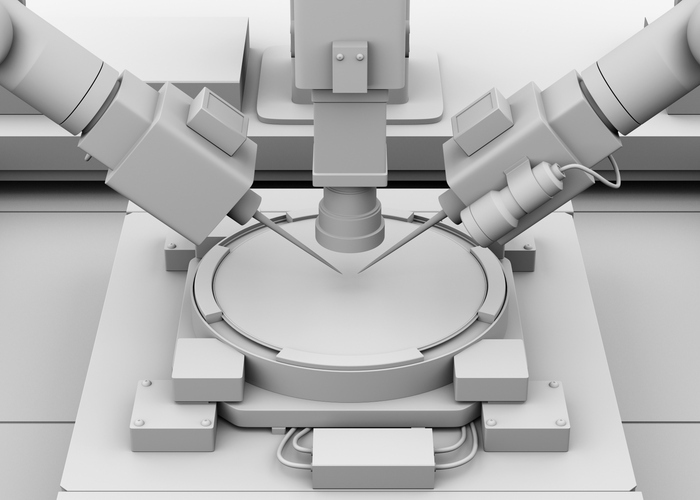
AI as the New Lab Partner
In the most advanced research environments, artificial intelligence is no longer a supplemental tool—it’s part of the scientific workforce. Modern AI platforms are capable of:
-
Designing and optimizing experiments
-
Processing multi-omic datasets in minutes
-
Identifying non-obvious correlations in noisy data
-
Guiding researchers toward more efficient protocols
-
Predicting instrument drift or experimental failure before it occurs
A growing number of labs now operate semi-autonomous experimental loops, where instruments run continuously, data flows into cloud engines, and algorithms adjust the next iteration automatically.
For the scientific community, this shift means something profound:
the bottleneck is no longer computational power; it’s access to reliable, well-instrumented laboratories capable of feeding the AI with high-quality data.
The Refurbished Equipment Renaissance: Powered by Science, Not Savings
At the same time, research institutions, academic, government, and industrial are embracing a trend once viewed as fringe: acquiring refurbished scientific instruments from verified dealers.
But this movement is about far more than cost.
It’s about enabling cutting-edge science with greater agility.
Why scientists are turning to refurbished instruments:
1. Proven reliability under real scientific conditions
Professionally refurbished analytical equipment often undergoes more rigorous validation than new units—functional testing, calibration, quality checks, and performance benchmarking.
2. Compatibility with modern digital ecosystems
Many legacy instruments were built during a period of exceptionally high engineering standards.
When calibrated and outfitted with digital interfaces, they integrate seamlessly with AI-driven workflows.
3. Access to discontinued or rare high-performance tools
Certain detectors, optics, chromatograph components, or vacuum assemblies are no longer manufactured, yet remain unmatched in performance. The refurbished market keeps them available for research.
4. Sustainability that aligns with scientific values
The scientific community is increasingly vocal about sustainable practices. Extending the life of well-engineered instruments aligns with circular science principles—and reduces electronic waste.
This is not a downgrade.
For many labs, it’s a leap forward.
Where AI and Refurbished Instrumentation Meet
The most compelling shift is what happens when these two movements converge.
AI elevates refurbished equipment
With modern monitoring algorithms, even older instruments become smarter:
-
AI can track baseline drift
-
predict failure modes
-
detect deviations in temperature, pressure, or signal quality
-
optimize instrument scheduling for maximum throughput
AI effectively extends the lifespan and accuracy of refurbished scientific tools, turning them into highly reliable components of an intelligent lab ecosystem.
Refurbished instruments expand AI’s reach
By lowering procurement costs, labs can install more analytical nodes, more HPLCs, more microscopes, more sensors, more robotic handlers; feeding exponentially more data into AI systems that learn and refine experiments over time.
What results is a densely instrumented, data-rich research environment that would have been financially impossible with only new equipment.
A Smarter Future for Scientific Discovery
The scientific community is in the midst of a paradigm shift. The future lab will not be defined by the age of its instruments, but by:
-
how intelligently they communicate,
-
how efficiently they generate data,
-
and how seamlessly they integrate with AI-driven science.
Refurbished instrumentation, paired with cutting-edge digital workflows, offers researchers a way to scale capability faster than ever before. It democratizes access to high-performance science and builds resilience into laboratory infrastructure.
Tomorrow’s breakthroughs won’t emerge from the newest lab—they’ll emerge from the smartest, most adaptable, most instrument-rich labs.
And increasingly, those labs will be powered by a mix of AI intelligence and expertly restored, high-quality equipment.
The renaissance is here. And the scientific community is leading it.
For more news for the scientific community and special discounts on equipment subscribe to HTT Magazine