
Miele PLW 8505 Installation Requirements: Complete Lab Setup Guide
13th Oct 2026
Miele PLW 8505 Installation Requirements: What Your Laboratory Needs Before Delivery
Planning to install a Miele PLW 8505 laboratory glassware washer? Before the equipment arrives, your laboratory needs to prepare the electrical connection, water supplies, drainage, physical installation space, and chemical dispensing setup.

The Miele PLW 8505 is an undercounter professional laboratory glassware washer designed for research facilities, university laboratories, analytical testing operations, and industrial laboratories. Its compact footprint and North American 115V configuration make it attractive for labs transitioning from manual glassware washing.
However, 115V does not mean the washer can be connected to just any household-style outlet. The North American PLW 8505 requires a properly rated 20-amp electrical connection, suitable water supplies, and a compliant drainage arrangement.
This guide covers the practical installation specifications, facility preparation steps, common mistakes, and questions laboratory managers should resolve before bringing the washer into service.
If your laboratory is evaluating a new system, explore the Miele PLW 8505 Laboratory Glassware Washer available from HiTechTrader.
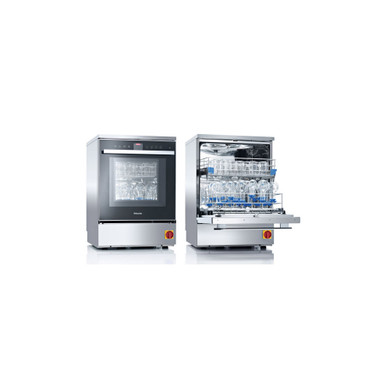
Quick Answer: What Are the Miele PLW 8505 Installation Requirements?
For the North American 115V/60Hz configuration, the Miele PLW 8505 requires a suitable 20A electrical supply with NEMA 5-20 connection, cold and hot water inlets, a demineralized-water connection for applicable rinse processes, a correctly configured drain, and sufficient installation space.
| Requirement | North American PLW 8505 Specification |
|---|---|
| Electrical supply | 115V AC, 60Hz, single phase |
| Circuit / receptacle | 20A protection; NEMA 5-20 configuration |
| Rated load | 1.6 kW |
| Water connections | Cold, hot, and demineralized water |
| Water connection fittings | 3/4-inch male garden-hose-thread connections specified on-site |
| Water pressure | 14.5–116 PSI (100–800 kPa) |
| Water supply flow | 3.2 GPM (12 L/min) per specified connection |
| Drain capacity | Up to 3.5 GPM (13 L/min) |
| Drain lift | Maximum approximately 31.5 inches (0.8 m) above floor |
| External dimensions | 33.5" H × 23.625" W × 24.8125" D |
| Net weight | Approximately 143 lb (65 kg) |
1. Electrical Requirements: Does the Miele PLW 8505 Need a Special Outlet?
One of the most common questions about the PLW 8505 is whether its 115V configuration allows installation using an ordinary laboratory outlet.
The answer is that the washer uses a familiar North American voltage, but still needs an appropriately configured electrical supply.
115V Power, 20A Circuit
Miele specifies the following electrical characteristics for its North American PLW 8505:
- 115V AC electrical input.
- 60Hz frequency.
- Single-phase power with neutral and ground.
- 1.6 kW total rated load.
- 20A circuit protection.
- NEMA 5-20 plug and matching receptacle arrangement.
Although this configuration avoids the higher-voltage, three-phase infrastructure required by some larger laboratory washers, facilities teams should still verify the circuit before installation.
A typical 15A receptacle is not a substitute for a correctly rated NEMA 5-20 installation.
What Should Your Electrician Verify?
- Correct circuit rating and wiring.
- Compatible receptacle and grounding.
- Accessible power-disconnection provisions.
- Electrical capacity under the expected laboratory load.
- Compliance with local electrical codes and manufacturer requirements.
Miele's installation plan also requires an accessible disconnecting device near the machine, with specific placement requirements. The electrical installation should be reviewed by qualified personnel rather than assumed suitable because an outlet is already present.
Installation tip: Have your facilities team inspect the actual installation location before scheduling delivery. Resolving a circuit issue before the washer arrives is generally easier than discovering it during commissioning.
2. Plumbing Requirements: Hot Water, Cold Water, and DI Water
The Miele PLW 8505 uses separate supply connections for cold water, hot water, and demineralized water.
Each connection serves an important role in the cleaning and rinsing process. Laboratories should evaluate supply pressure, water quality, flow capacity, and the accessibility of shutoff valves.
Cold Water Connection
The manufacturer's installation plan specifies a cold water supply with:
- Maximum supply temperature of 59°F (15°C).
- Supply pressure between 14.5 and 116 PSI.
- Specified flow capacity of 3.2 GPM.
- Suitable 3/4-inch threaded connection.
The incoming water should meet the manufacturer's applicable quality requirements.
Hot Water Connection
The hot water supply must meet similar pressure and flow requirements, with a published maximum inlet temperature of 140°F (60°C).
Where a separate hot water supply is unavailable, Miele's operating instructions describe an approved alternative connection arrangement using the cold water supply. This should be reviewed against the current installation instructions before implementation.
Demineralized or DI Water Connection
The PLW 8505 includes a connection for demineralized water, allowing suitable programs to perform a final rinse using high-purity water.
This is particularly valuable in analytical laboratories where mineral residue can interfere with subsequent testing, measurements, or sample preparation.
According to Miele's installation specifications, the demineralized water supply has a maximum published conductivity of 30 µS/cm, along with defined pressure, flow, hardness, and temperature requirements.
Laboratories using a central DI water system should confirm that it can provide the necessary flow and pressure at the washer connection, especially when other instruments are drawing from the same supply.
Water Hardness Matters More Than Many Laboratories Realize
Hard water can leave mineral deposits on glassware, spray components, and internal surfaces.
Miele's installation documentation specifies a maximum cold/hot inlet water hardness of approximately 4 grains per gallon, or 70 ppm as CaCO3.
Where source water exceeds the permitted hardness, an appropriate water-treatment system may be required.
For analytical chemistry and quality-control laboratories, poor rinse-water quality can result in additional washing, inspection, and troubleshooting work.
Before installation: Test the available water supply, confirm the DI connection, and document any treatment or filtration requirements.
3. Drainage Requirements: Don't Overlook the Wastewater Connection
Drainage is easy to overlook when planning a glassware washer installation. However, the wastewater system must accommodate the machine's discharge rate, temperature, and pump limitations.
For the PLW 8505, Miele's installation plan lists:
- Maximum drain delivery of approximately 3.5 GPM (13 L/min).
- A supplied drain hose approximately 6.6 feet (2 m) long.
- Maximum approximate drain-hose routing length of 13.1 feet (4 m).
- Maximum pump head height of approximately 31.5 inches (0.8 m) above floor level.
- A specified 22 mm connection arrangement.
The installation plan also addresses drain-water temperature and proper connection methods.
Why Drain Height Matters
Placing the drain too high can exceed the machine's specified pumping capability.
This can create drainage problems, cycle interruptions, or incomplete wastewater removal.
Before installation, measure the height of the proposed drain connection from the finished floor and compare it with the manufacturer's requirements.
Laboratory Wastewater Considerations
Some laboratories process glassware containing residues from chemical synthesis, analytical testing, or other specialized workflows.
The applicable disposal requirements depend on the substances involved, the washer's approved cleaning processes, and local wastewater regulations.
A laboratory glassware washer should not be treated as a way to dispose of hazardous chemicals. Glassware may require appropriate pre-treatment or other approved handling before machine cleaning.
Facilities tip: Confirm the drain connection and wastewater requirements with your building's plumbing and environmental health and safety teams before commissioning the washer.
4. Space Requirements: Will the PLW 8505 Fit Under Your Counter?
The Miele PLW 8505 is designed for undercounter installation, making it useful for laboratories with limited floor space.
But fitting the cabinet dimensions is only one part of the installation.
Published Equipment Dimensions
- Height: 33.5 inches (850 mm).
- Width: 23.625 inches (600 mm).
- Depth: Approximately 24.8 inches (630 mm).
- Net weight: Approximately 143 pounds (65 kg).
The installation area must also allow room for the equipment's water connections, power cord, drain hose, servicing access, and door operation.
Depending on the cabinetry, the installer may need to account for the rear service connections and the space needed to route hoses without kinking or restricting flow.
Five Measurements to Check Before Delivery
- Opening width: Verify that the equipment can pass into the intended position without interference.
- Available height: Check the underside of the countertop and leveling requirements.
- Available depth: Account for hoses and electrical connections behind the unit.
- Door clearance: Ensure the full-glass drop-down door and loaded baskets can be accessed comfortably.
- Delivery path: Check doors, hallways, elevators, and other restrictions between receiving and the installation site.
Miele requires the machine to be installed level, and the installation documentation should be followed for positioning and service access.
Don't Forget Heat and Humidity
The laboratory must also accommodate heat and humidity generated during washer operation.
Miele provides ambient-temperature and ventilation-related requirements in its installation documentation. The published installation environment is approximately 40–105°F (5–40°C), subject to the specified humidity conditions.
For smaller laboratory rooms or enclosed installation areas, facilities personnel should review whether the space has adequate air circulation and environmental control.
5. Chemical Dispensing and Cleaning-Agent Preparation
The PLW 8505 uses two integrated dispensing pumps for suitable liquid cleaning and neutralizing agents.
This helps support consistent automated chemical dosing during compatible cleaning programs.
Before commissioning, laboratories should confirm:
- The approved detergent and neutralizing-agent requirements.
- Appropriate chemical storage and container placement.
- Correct tubing connections and chemical pickup arrangements.
- Suitable space to replace chemical containers.
- Staff procedures for safe chemical handling.
Not all laboratory detergents are interchangeable. Incorrect chemistry can damage the washer, affect glassware compatibility, or leave residues that interfere with subsequent experiments.
Use chemical products and dosing arrangements compatible with Miele's instructions and the laboratory's specific cleaning requirements.
6. Glassware Baskets and Injectors: Plan the Load Before Installation
A laboratory washer's ability to clean different types of glassware depends partly on the baskets, injectors, and accessories installed.
The PLW 8505 is designed to accommodate suitable load carriers and injector arrangements for laboratory glassware.
Miele describes a configuration capable of processing up to 39 narrow-neck items per cycle using the relevant injector setup.
However, this does not mean every loading arrangement includes the same number of injectors or supports the same glassware types.
Match Accessories to the Laboratory's Actual Inventory
Before ordering, list the glassware your team washes most frequently:
- Erlenmeyer flasks.
- Volumetric flasks.
- Beakers.
- Test tubes and sample containers.
- Narrow-neck bottles and reaction vessels.
- Other approved laboratory glassware and utensils.
Determine which items require injector washing, which can be cleaned in compatible baskets, and whether special holders or inserts are necessary.
Improper loading can obstruct spray coverage or prevent internal glassware surfaces from being cleaned adequately.
For laboratories processing delicate, narrow-neck, or specialized glassware, basket selection should be treated as part of the purchasing decision rather than an afterthought.
Explore Miele laboratory glassware washer options at HiTechTrader.
7. Commissioning: What to Check Before the First Wash Cycle
Once the equipment is physically installed, the laboratory should complete appropriate startup and commissioning procedures with qualified personnel.
A practical pre-operation review should include:
- Verify the electrical supply and grounding.
- Confirm the washer is level and securely positioned.
- Check hot, cold, and demineralized-water connections.
- Confirm incoming water pressure and quality.
- Inspect the drain connection and discharge routing.
- Verify chemical dispensing components and approved chemicals.
- Check the basket, rack, and injector installation.
- Confirm spray arms and filters are correctly positioned.
- Review the manufacturer's safety and operating instructions.
- Complete the prescribed commissioning checks and test cycles.
For laboratories with quality-management or regulated cleaning requirements, commissioning may also involve documenting cleaning-process suitability, operator training, and the results of applicable qualification or validation activities.
Installation alone does not automatically establish that a washer is validated for a particular laboratory process.
Common Miele PLW 8505 Installation Mistakes to Avoid
Mistake 1: Assuming Every 115V Outlet Will Work
The PLW 8505 requires a compatible 20A electrical installation. Confirm the circuit and receptacle rather than relying on voltage alone.
Mistake 2: Forgetting About the DI Water Supply
The available rinse-water quality can be important in analytical applications. Plan the demineralized-water connection and verify its pressure, flow, and quality.
Mistake 3: Ignoring Water Hardness
Water exceeding the manufacturer-specified hardness can lead to mineral deposits and cleaning problems. Evaluate water treatment before installation.
Mistake 4: Positioning the Drain Too High
The drain pump has a defined maximum head height. Incorrect drain positioning may cause poor drainage or cycle faults.
Mistake 5: Measuring Only the Cabinet Opening
Account for door clearance, hoses, electrical connections, leveling, and service requirements.
Mistake 6: Ordering the Washer Without the Correct Accessories
The appropriate injector baskets, holders, and load carriers depend on the glassware being cleaned. Confirm the full required configuration when requesting a quote.
Is the Miele PLW 8505 the Right Washer for Your Laboratory?
The PLW 8505 can be a strong option for laboratories that need a professional undercounter glassware washer but do not require the capacity or facility infrastructure associated with larger washer systems.
It is particularly relevant to:
- University Teaching Laboratories: Routine glassware cleaning between laboratory sessions.
- Analytical Chemistry Laboratories: Repeatable cleaning and DI-water rinsing for compatible glassware.
- Industrial Quality-Control Laboratories: Standardized cleaning workflows for testing equipment.
- Environmental and Water Testing Laboratories: Routine cleaning of bottles, flasks, and approved sample containers.
- Research and Development Facilities: Consistent laboratory glassware handling across multiple projects.
For laboratories with substantially higher throughput, more complex glassware configurations, or requirements for pass-through cleaning workflows, larger washer systems may be more appropriate.
Compare the Miele G7825 Glassware Washer or explore the Miele G7826 Pass-Through Washer to evaluate different equipment configurations.
Miele PLW 8505 Installation Checklist
Use this checklist when coordinating with your laboratory manager, facilities team, electrician, plumber, and equipment supplier.
Before the washer arrives:
- ☐ Confirm the exact PLW 8505 electrical configuration.
- ☐ Verify a suitable 115V/20A NEMA 5-20 connection.
- ☐ Review the manufacturer's electrical disconnect requirements.
- ☐ Check the cold water supply and shutoff.
- ☐ Check the hot water supply and shutoff.
- ☐ Verify DI water availability and quality.
- ☐ Confirm water pressure, flow, and hardness.
- ☐ Verify drain position, connection, and capacity.
- ☐ Measure cabinet opening and delivery access.
- ☐ Confirm suitable ventilation and environmental conditions.
- ☐ Identify necessary injector baskets and racks.
- ☐ Confirm detergent and neutralizing-agent requirements.
- ☐ Schedule qualified installation and commissioning.
- ☐ Establish operator training and maintenance procedures.
Frequently Asked Questions
Does the Miele PLW 8505 need a 220V outlet?
No. The North American PLW 8505 configuration discussed here uses 115V AC, 60Hz power. It does, however, require a compatible 20A electrical installation with the specified NEMA 5-20 arrangement.
Does the Miele PLW 8505 require a separate DI water supply?
The PLW 8505 has a dedicated demineralized-water connection, and applicable cleaning programs use it for final rinsing. Laboratories should plan and verify the water supply needed for their selected cleaning processes.
Can the PLW 8505 fit under a standard laboratory counter?
The washer measures approximately 33.5 inches high, 23.625 inches wide, and 24.8 inches deep. Whether it fits depends on the available opening, leveling, door clearance, service access, and connection space.
What water pressure does the Miele PLW 8505 require?
Miele lists a required water pressure range of 14.5 to 116 PSI (100–800 kPa). The supply must also meet applicable flow and water-quality requirements.
Can the Miele PLW 8505 clean narrow-neck laboratory glassware?
Yes. With appropriate injector accessories, Miele specifies a configuration capable of washing up to 39 narrow-neck glassware items per cycle. Capacity depends on the selected load carriers and the dimensions of the glassware.
Does the Miele PLW 8505 require special detergent?
The machine uses integrated dosing pumps for suitable cleaning and neutralizing agents. Cleaning chemistry should be selected according to Miele's instructions and the laboratory's glassware, residues, and cleaning requirements.
Is professional installation recommended?
Yes. Miele's installation plan calls for authorized installers working in accordance with applicable standards, regulations, and safety codes. Qualified personnel should complete the required connections and commissioning.
Download the Official Miele Installation Requirements
For complete technical planning, use the manufacturer's own installation documentation alongside this guide.
Download the Official Miele PLW 8505 U.S. Installation Plan (PDF)
Additional specifications and product information are available through Miele Professional's PLW 8505 product documentation.
Ready to Upgrade Your Laboratory Glassware Washing Workflow?
Installing a professional laboratory glassware washer is an investment in more consistent cleaning procedures, laboratory efficiency, and equipment readiness.
The Miele PLW 8505 offers an undercounter configuration, professional cleaning programs, integrated chemical dosing, and a dedicated demineralized-water connection for laboratories that need dependable glassware washing without immediately moving to a large industrial installation.
HiTechTrader has supplied scientific equipment since 1982 and offers the new Miele PLW 8505 to laboratory buyers seeking suitable professional washing equipment.
Before ordering, our team can discuss the product configuration, available accessories, pricing, and delivery arrangements.
Get a Quote for the Miele PLW 8505
Planning a new laboratory, upgrading your glassware cleaning equipment, or replacing an aging washer?
Contact HiTechTrader for current pricing, availability, compatible accessories, and shipping information.
View the Miele PLW 8505 & Request a Quote
Call: 609-518-9100
Email: sales@hitechtrader.com
Browse: All Laboratory Glassware Washers
HiTechTrader — Supplying Scientific Equipment Since 1982.