
96-Well Plate Homogenizer Guide: High-Throughput Sample Preparation for Cell Lysis and Extraction
5th Oct 2026
96-Well Plate Homogenizer Guide: High-Throughput Sample Preparation for Cell Lysis, Extraction and Research
A 96-well plate homogenizer or plate sonicator allows laboratories to process dozens of samples in parallel instead of homogenizing or sonicating individual tubes one at a time.
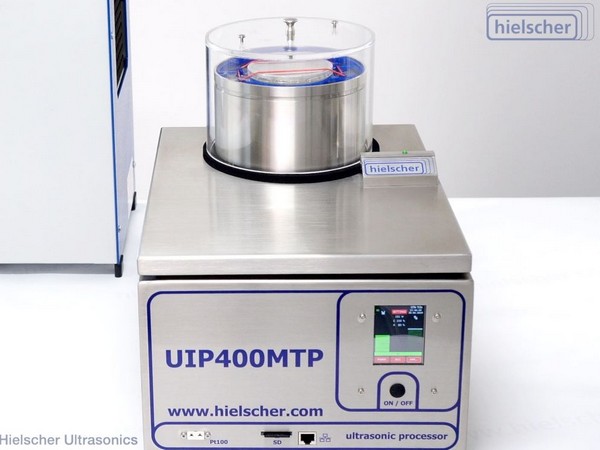
For high throughput workflows, two of the most useful approaches are non-contact ultrasonic plate sonication and bead based plate homogenization.
Non-contact sonication is especially attractive for liquid samples, cell lysis, protein extraction, DNA/RNA workflows, chromatin processing and applications where reducing direct tool to sample contact is important. Bead-based homogenization can be better suited to mechanically difficult samples such as plant material, fibrous tissue, bacteria and other tough matrices.
The best system is not necessarily the one with the highest power rating. It is the one that delivers repeatable processing across all wells while protecting the analyte you ultimately need to measure.
Key Takeaways
- A 96-well homogenization workflow can eliminate much of the repetitive handling associated with sequential tube by tube processing.
- Non-contact plate sonication can process samples without placing an ultrasonic probe into each well.
- Bead-based systems provide aggressive mechanical disruption and can be particularly effective for tough tissue, plants, yeast and bacteria.
- Well-to-well uniformity is one of the most important performance criteria for any high throughput system.
- Plate material, sample volume, temperature, sealing method and downstream assay requirements all influence results.
- The biggest productivity gain often comes from keeping samples in the same plate through homogenization, extraction, centrifugation and analysis.
What Is a 96-Well Plate Homogenizer?
A 96-well plate homogenizer is equipment designed to disrupt, mix, lyse, extract or otherwise process multiple samples simultaneously in a standard multi well plate or compatible sample format.
Traditional laboratory homogenization often involves processing:
- one tube at a time
- one vessel at a time
- one probe-sonication step at a time
- one manually handled sample after another
That approach can work perfectly well when a laboratory processes five samples.
It becomes much less attractive when the same laboratory needs to prepare 48, 96, 192 or hundreds of samples per day.
High throughput plate processing changes the workflow by allowing many samples to receive the same treatment during a single programmed run.
This can improve:
- throughput
- operator productivity
- sample to sample consistency
- workflow standardization
- automation potential
- documentation and reproducibility
For laboratories already performing assays in 96-well plates, keeping sample preparation in the same general format can also reduce transfers between tubes and plates.
Current HiTechTrader 96-Well Sonication Equipment
HiTechTrader carries a Hielscher ultrasonic platform designed specifically for multi well plate processing:
Hielscher 96-Well Plate Ultrasonic Mixer / Multi-Well Plate Sonication System .
You can also browse:
- Hielscher ultrasonic equipment
- laboratory homogenizers
- Hielscher VialTweeter for simultaneous processing of closed vials rather than a microplate.

Why Move from Individual Tubes to a 96-Well Workflow?
The largest advantage is not simply the ability to say that 96 samples fit into a plate.
The real advantage is eliminating repeated manual operations.
Consider a laboratory using a traditional probe sonicator.
For every sample, the technician may need to:
- position the tube
- insert the probe
- run the sonication cycle
- remove the probe
- clean the probe
- move to the next sample
- repeat the process
Even if the actual sonication time is short, the cumulative handling time can become substantial.
A plate-based system changes the process from:
96 individual processing events
to:
one plate-loading step followed by a programmed processing cycle.
Three Main Ways to Process Samples in a 96-Well Format
Not every instrument described as a plate homogenizer works the same way.
The three major approaches are:
1. Non-Contact Ultrasonic Plate Sonication
A dedicated plate sonicator transfers ultrasonic energy into samples through the plate rather than inserting an ultrasonic probe directly into each individual well.
This approach can be attractive for applications involving:
- cell lysis
- protein extraction
- DNA fragmentation
- RNA-related sample preparation
- chromatin shearing
- particle dispersion
- deagglomeration
- emulsification
- high-throughput biological sample preparation
2. Bead-Based Plate Homogenization
Bead homogenization places small beads inside the sample wells or tubes and uses rapid motion to create high energy impacts.
This is often very effective for:
- plant tissue
- muscle tissue
- fibrous material
- bacteria
- yeast
- soil related samples
- hard or mechanically resistant biological samples
3. Plate Shaking and Mixing
Standard microplate shakers can provide excellent mixing and resuspension.
They should not automatically be considered equivalent to a high energy homogenizer.
A plate shaker may be excellent for:
- reagent mixing
- resuspension
- incubation
- assay mixing
but may not deliver enough energy for demanding cell disruption or tissue homogenization.
96-Well Sonicator vs Bead Mill Homogenizer
| Factor | 96-Well Plate Sonication | Bead-Based Homogenization |
|---|---|---|
| Processing mechanism | Ultrasonic cavitation and acoustic energy | Mechanical bead impact |
| Probe enters sample? | No with a true indirect/non-contact plate sonicator | No external probe; beads remain inside each sample |
| Liquid cell lysates | Excellent candidate | Also effective |
| Protein extraction | Strong option | Strong option depending on sample type |
| DNA/RNA workflows | Strong option when protocol calls for controlled sonication | Common for mechanical lysis prior to extraction |
| Tough tissue | May require preparation or protocol optimization | Often particularly effective |
| Plant material | Application dependent | Frequently well suited |
| Cross-contamination risk from processing tool | Low because the ultrasonic tool does not enter individual samples | Low when samples remain sealed with their own beads |
| Consumables | Plate and sealing requirements | Plate/tubes plus beads |
| Downstream automation | Excellent potential when standard plates are maintained | Good, depending on plate and bead-removal requirements |
How Non-Contact 96-Well Sonication Works
A traditional probe sonicator places a metal ultrasonic probe directly into the sample.
A non-contact plate sonicator takes a different approach.
The ultrasonic energy is transferred indirectly into the multi-well plate so that the sonotrode does not need to enter every well.
For high throughput laboratories, that can provide several practical advantages.
Less direct-contact contamination risk
Because a probe does not move from sample to sample, there is less opportunity for residual material from one well to be physically carried into another by the processing tool.
Less probe cleaning
Sequential probe processing usually requires cleaning between samples.
Plate sonication can remove much of that repetitive labor.
Better compatibility with sealed workflows
Depending on the plate and application, samples may be processed while remaining enclosed within their plate wells.
Parallel treatment
Instead of one ultrasonic probe processing one sample, the goal is to expose the full plate to controlled ultrasonic energy during the same run.
Applications for a 96-Well Plate Homogenizer or Sonicator
Cell Lysis
Cell lysis is one of the clearest use cases for high-throughput ultrasonication.
The objective is to disrupt cell structures and release intracellular material for downstream analysis.
Applications can include:
- protein extraction
- nucleic acid preparation
- metabolomics
- biomarker research
- screening studies
The ideal ultrasonic settings depend heavily on cell type.
Bacterial cells, mammalian cells, yeast and other organisms do not respond identically to the same energy input.
Protein Extraction
High throughput protein studies often require consistent lysis across dozens of samples.
This makes well to well reproducibility especially important.
An extraction method that produces excellent results in the center of a plate but weak recovery in corner wells is not truly optimized.
DNA and RNA Sample Preparation
Ultrasound is used in numerous nucleic acid workflows, including sample disruption and controlled fragmentation.
For high throughput work, the benefit is being able to apply a repeatable treatment across an entire plate rather than manually processing individual samples.
Chromatin Shearing
Chromatin immunoprecipitation and related workflows may require controlled DNA fragmentation.
Sonication conditions must be carefully validated because insufficient energy may leave fragments too large while excessive processing can produce undesirable fragmentation or heating.
Tissue Homogenization
The suitability of plate sonication for tissue depends heavily on the tissue type and sample preparation.
Soft or previously disrupted tissues may respond differently than dense fibrous material.
For especially tough tissue, bead based homogenization may provide more aggressive mechanical disruption.
Nanoparticle Dispersion and Deagglomeration
Ultrasonic energy is also widely used to disperse particles and break apart agglomerates.
A plate format can be particularly useful when research requires screening many formulations or experimental conditions in parallel.
96-Well Homogenization Is Not Simply “96 Tubes at Once”
One of the most important concepts when moving to a plate workflow is that the process itself changes.
Factors that can behave differently include:
- sample depth
- well geometry
- surface area to volume ratio
- plate material
- plate bottom thickness
- energy transmission
- heat dissipation
- evaporation
- edge effects
A protocol that works perfectly in a 1.5 mL microcentrifuge tube should not automatically be copied into a 96-well plate without validation.
Well to Well Uniformity: One of the Most Important Specifications
A high-throughput system is only useful when the results are consistent across the plate.
That means laboratories should pay close attention to differences between:
- corner wells
- edge wells
- center wells
A good validation study should compare processing effectiveness in multiple plate positions.
Depending on the application, useful indicators might include:
- protein yield
- DNA concentration
- fragment size
- particle-size distribution
- cell disruption efficiency
- assay response
Temperature Control Matters During Sonication
High-intensity ultrasonic processing can generate heat.
For many samples, uncontrolled heating can affect:
- proteins
- enzymes
- nucleic acids
- temperature-sensitive metabolites
- biological activity
The correct protocol may therefore use:
- controlled cooling
- shorter processing intervals
- pulse sonication
- temperature monitoring
- pre-chilled samples
Hielscher's current UIP400MTP platform incorporates temperature-management features specifically because heat control is an important part of reproducible ultrasonic sample preparation.
Plate Material and Geometry Matter
Do not assume every 96-well plate will perform identically.
Factors to evaluate include:
- plate material
- well bottom thickness
- flat vs rounded bottoms
- well geometry
- working volume
- seal material
- plate rigidity
One major advantage of a system designed around standard multi-well plates is that laboratories are not necessarily locked into a proprietary consumable format.
However, the plate still needs to be appropriate for the particular method.
How Much Sample Should Be in Each Well?
There is no universal ideal volume.
Volume affects:
- liquid depth
- energy transfer
- temperature rise
- mixing behavior
- evaporation
- recovery
Method development should therefore optimize sample volume along with amplitude, processing time, pulse cycle and cooling conditions.
Can the Plate Remain Sealed?
This is an important question for laboratories concerned about:
- aerosols
- cross contamination
- sample loss
- volatile solvents
- biological containment
The plate, seal and application must all be compatible with the selected processing method.
A seal must remain secure during processing without interfering with the workflow.
96-Well Sonication vs Individual Probe Sonication
| Consideration | Individual Probe Sonication | 96-Well Plate Sonication |
|---|---|---|
| Samples processed simultaneously | Usually one | Entire plate workflow |
| Probe enters sample | Yes | No with indirect systems |
| Cleaning between samples | Usually required | Significantly reduced |
| High-throughput suitability | Limited | Strong |
| Flexibility for unusual vessels | Very good | Optimized around compatible plates |
| Automation potential | More difficult | Much stronger |
| Method development | Excellent for individual sample optimization | Excellent once the plate protocol is standardized |
When Should a Lab Switch to a 96-Well Homogenization Workflow?
A plate-based system becomes particularly compelling when:
- sample volume is increasing
- staff spend significant time processing samples one at a time
- the downstream assay already uses microplates
- reproducibility between operators is becoming a concern
- sample tracking is becoming complicated
- automation is planned
- the laboratory needs predictable turnaround time
If your technicians spend more time preparing samples than analyzing the results, the sample preparation workflow is probably worth examining.
Example: Why Plate Processing Can Save So Much Time
Imagine a laboratory that needs to process 96 samples.
Even if manual handling takes only one minute per sample before and after individual processing, that already represents more than an hour and a half of repetitive handling.
That does not include:
- actual homogenization time
- probe cleaning
- label verification
- tube transfers
- operator interruptions
A plate workflow consolidates many of those repeated operations.
This is why throughput improvements frequently come as much from workflow simplification as from processing speed.
Integration with Automated Laboratory Workflows
The standard microplate format is already widely used in:
- automated liquid handlers
- plate centrifuges
- microplate readers
- robotic stackers
- automated incubators
- high-throughput screening systems
A homogenization or sonication step that preserves that same format can therefore fit naturally into an automated sample-preparation chain.
A potential workflow might look like:
Liquid handling → 96-well sonication → plate centrifugation → supernatant transfer → assay or analytical platform
Every eliminated manual transfer can reduce labor and potentially reduce opportunities for sample identification errors.
What to Look for When Buying a 96-Well Plate Homogenizer
- Plate compatibility: determine which plate formats and materials are supported.
- Well to well uniformity: ask how energy distribution across the plate is verified.
- Temperature control: important for sensitive biological samples.
- Programmable parameters: amplitude, cycle time, duration and temperature should be controllable when relevant.
- Repeatability: the same programmed method should produce comparable processing from run to run.
- Consumables: determine whether the system requires proprietary plates or accessories.
- Automation compatibility: important if the laboratory uses or plans to use liquid handling.
- Data logging: useful for regulated or reproducibility focused workflows.
- Cooling requirements: determine whether an external chiller or recirculating system is required.
- Electrical requirements: verify compatibility with your laboratory.
- Accessories: confirm exactly what is included when purchasing used equipment.
Should You Buy a New or Used 96-Well Homogenizer?
Used high-throughput sample-preparation equipment can offer significant savings when the equipment is properly evaluated.
Before buying, confirm:
- the exact model
- operating condition
- included accessories
- plate holder or processing chamber
- controller
- temperature sensor
- cooling components
- software or interface requirements
- electrical configuration
For specialized equipment, included accessories can have a major effect on the real cost of the system.
Which 96-Well Homogenization Method Is Best?
Choose non-contact plate sonication when:
- You are processing liquid samples.
- You want to reduce direct probe contact.
- Cell lysis or extraction is the primary objective.
- You want to process standard multi-well plates.
- Your workflow may eventually be automated.
- You want to minimize probe cleaning between samples.
Consider bead-based homogenization when:
- Your samples contain tough tissue.
- You are processing plant material.
- You need aggressive mechanical disruption.
- You are homogenizing bacteria or yeast.
- Your protocol already uses beads.
Use a conventional probe homogenizer when:
- You process only a small number of samples.
- Your sample vessels vary significantly.
- You need maximum flexibility.
- Your process has not yet been standardized for a plate format.
Frequently Asked Questions
What is a 96-well plate homogenizer?
A 96-well plate homogenizer is a sample preparation system that processes multiple samples in parallel in a standard 96-well or compatible multi-well plate format. Depending on the equipment, homogenization may use ultrasonic energy, bead impact or another mechanical method.
Can all 96 wells be homogenized at the same time?
Yes, systems specifically designed for full plate processing can treat an entire plate during a single run. Well to well uniformity should be verified for the specific instrument, plate and application.
Can a 96-well sonicator lyse cells?
Yes. High-intensity multi well sonication is used for cell lysis and other biological sample preparation workflows. Processing conditions need to be optimized for the organism, cell type, volume and downstream analyte.
Can a 96-well plate sonicator be used for protein extraction?
Yes. Protein extraction is a common application for high throughput sonication. Temperature control and processing intensity are particularly important when protein integrity must be preserved.
Can a 96-well sonicator be used for DNA or RNA workflows?
Yes. Multi-well sonicators are used in nucleic acid sample preparation, including controlled DNA/RNA fragmentation and extractio -related workflows. Protocol requirements differ substantially by application.
Can a 96-well plate sonicator shear chromatin?
Yes, high-intensity ultrasonic systems can be used for chromatin shearing. Fragment size should be experimentally validated using the specific plate, sample volume and sonication parameters.
Is a 96-well plate homogenizer the same as a microplate shaker?
No. A microplate shaker is primarily designed to mix or agitate samples. A true homogenizer or high intensity sonicator delivers substantially more disruptive energy for applications such as cell lysis, extraction or particle dispersion.
What is better: sonication or bead beating?
Neither is universally better. Sonication can be excellent for liquid samples, cell lysis and extraction while avoiding direct probe contact. Bead beating is often particularly effective for hard tissue, plants, bacteria, yeast and other mechanically resistant samples.
Does 96-well sonication cause heating?
Ultrasonic processing can generate heat. Temperature should be monitored and controlled when processing temperature-sensitive proteins, enzymes, nucleic acids or other biological material.
Can standard 96-well plates be used?
Systems such as the Hielscher UIP400MTP are specifically designed around standard multi well plate formats. The exact plate material, geometry, seal and volume should still be validated for the individual application.
What is the difference between the Hielscher VialTweeter and a 96-well plate sonicator?
The VialTweeter is designed to sonicate multiple closed vials simultaneously, while a multi-well plate sonicator is optimized for plate-based workflows. The better choice depends largely on whether your laboratory's workflow is built around individual sealed tubes or microplates.
Read our comparison: Hielscher VialTweeter vs 96-Well Plate Sonicator .
Technical References
For current technical specifications and method development information, HiTechTrader recommends reviewing the manufacturer's documentation for the exact system.
- Hielscher — 96-Well Sonicator for High-Throughput Sample Preparation
- Hielscher — UIP400MTP Multi-Well Plate Compatibility
- Hielscher — UIP400MTP Integration with Laboratory Automation
Manufacturer capabilities and specifications can change by model revision and configuration. Always verify the exact equipment, accessories and manual before installation or method development.
Related HiTechTrader Guides
- 96-Well Plate Sonicator vs Bead Mill Homogenizer: Which High-Throughput Method Is Better?
- Hielscher VialTweeter vs 96-Well Plate Sonicator: Tubes or Microplates?
- 96-Well Plate Sonication for Protein Extraction, DNA/RNA and Chromatin Workflows
- How to Choose a Laboratory Homogenizer
- Rotor-Stator vs Ultrasonic Homogenizer
Need a 96-Well Homogenizer or High Throughput Sonicator?
If you are moving from individual sample preparation to a high throughput workflow, send HiTechTrader the basic application details:
- sample type
- number of samples per run
- volume per sample
- plate format
- desired endpoint
- cell or tissue type
- temperature sensitivity
- downstream assay or analytical method
We can help compare available ultrasonic, homogenization and sample preparation equipment based on your workflow.
Contact HiTechTrader About High-Throughput Sample Preparation
Or browse: Hielscher sonicators and current laboratory homogenizers .