

New


Fall Savings:
15% Off Select Items For A Limited Time
Contact Us To Save
Buchi Rotary Evaporator Replacement Glassware | Style C Cold-Trap Condenser | Outer Sleeve Only | Used Laboratory Equipment
You've got samples waiting, solvents to recover, and experiments that need to move forward. Then a critical glass component breaks, and a perfectly functional rotary evaporator suddenly becomes equipment you can't use.
For laboratory managers, chemists, and equipment technicians, sourcing the right replacement glassware can make the difference between keeping a valuable instrument in service and facing the expense of replacing a much larger assembly.
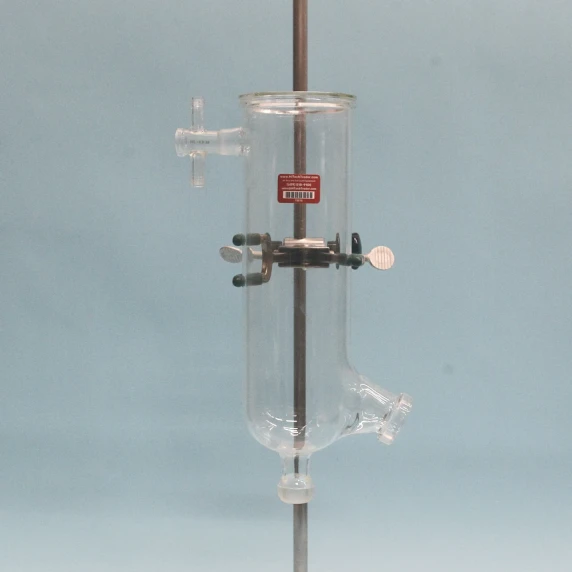
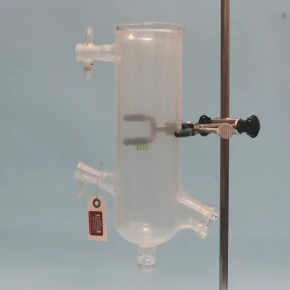
The used Buchi Rotavap Cold Trap Outer Sleeve, Style C Assembly, offers a specialized replacement component for laboratories maintaining compatible BÜCHI rotary evaporator cold trap condenser systems.
This component is the outer glass sleeve only, designed to form part of a multi component Style C cold trap condenser assembly. It is intended for buyers who already have, or are rebuilding, a compatible system and need to replace the outer condenser body rather than purchase an entirely new rotary evaporator.
BÜCHI Style C cold trap assemblies are associated with rotary evaporation applications involving low-boiling solvents and cooling arrangements that use a cold finger and suitable cooling media, such as dry ice, rather than relying exclusively on circulating tap water.
When properly assembled with the necessary compatible components, this condenser style provides a practical alternative to conventional water-cooled condenser designs for suitable solvent-recovery applications.
Available from HiTechTrader, serving laboratories and scientific equipment buyers since 1982.
This listing is for a used Buchi Style C cold-trap outer glass sleeve. It is not a complete condenser or rotary evaporator.
An inner cold finger, condenser lid, seals, stopcocks, receiving flask, vacuum components, mounting hardware, and other accessories should not be assumed included. Contact HiTechTrader to confirm the exact supplied components and current glass condition.
A rotary evaporator depends on coordinated heating, vacuum, rotation, condensation, and solvent collection.
The condenser is an important part of that process because solvent vapor leaving the evaporating flask must be cooled so that it can return to liquid form and move into the receiving flask.
In a BÜCHI Style C cold-trap configuration, the condenser uses a multi-component arrangement with an outer glass body and a separate internal cold finger.
The outer sleeve provides the surrounding glass structure and forms part of the vapor and condensate pathway.
It must work together with the correct internal cooling element, lid, seals, fittings, and receiving assembly.
For laboratories maintaining an existing Style C condenser, a damaged outer sleeve can prevent the complete system from being assembled or operated properly even if the remaining components are still functional.
Replacing the outer glass component may therefore be a more targeted purchasing decision than replacing the entire condenser assembly.
The outer sleeve serves several important functions within a properly configured condenser assembly:
Because the outer sleeve is only one element of the condenser, its presence alone does not establish cooling performance, vacuum integrity, or complete-system compatibility.
Many laboratory rotary evaporators use a water-cooled condenser, where water or another compatible fluid circulates through internal glass channels or coils.
BÜCHI's Style C cold trap arrangement uses a different approach.
A suitable cooling medium is placed within the appropriately configured internal cooling element, commonly referred to as a cold finger. The cold surface removes heat from solvent vapor as it passes through the condenser assembly.
When the vapor is cooled sufficiently, it condenses into liquid that can be collected in the receiving flask.
The manufacturer identifies its Style C cold-trap design as suitable for distillation involving low-boiling solvents, with dry ice or other appropriate cooling media used in place of a conventional cooling-water circuit.
This is particularly relevant when ordinary tap-water temperatures are insufficient for the intended solvent and process conditions.
In rotary evaporation, the required condensation temperature depends on several interacting variables:
A cold-trap design can provide a useful option for laboratories handling suitable volatile solvents, but cooling effectiveness must be evaluated for the specific operating conditions.
It is important not to confuse the functionality of the complete Style C condenser with the capabilities of the outer sleeve alone.
This listing provides the replacement outer sleeve, not a complete functional cold-trap cooling system.
Laboratory instruments can remain mechanically functional long after individual glass components need replacement.
A damaged condenser sleeve does not necessarily mean the rotary evaporator drive, heating bath, vacuum system, or other glassware must also be replaced.
When the remaining components are serviceable and compatible, sourcing a replacement sleeve can help bring the existing condenser assembly back into use.
If your laboratory already has the correct inner cold finger, condenser lid, sealing components, and associated fittings, replacing only the damaged outer sleeve may avoid purchasing duplicate parts.
This makes component-level replacement especially relevant to laboratories managing older but still useful BÜCHI equipment.
Replacing a complete condenser assembly may involve paying for components that your laboratory already owns and that remain usable.
A suitable used outer sleeve can offer a lower-cost alternative when the remaining parts do not require replacement.
Actual savings depend on pricing, component condition, availability, and any additional parts required for installation.
Some research laboratories use particular condenser configurations because their solvents, methods, or available laboratory infrastructure favor one arrangement over another.
Rather than changing the entire evaporation setup, replacing a compatible Style C outer sleeve may allow the laboratory to preserve its established equipment arrangement.
Laboratories that rely heavily on rotary evaporation may benefit from identifying replacement glassware before a component failure occurs.
Knowing which condenser style and replacement components the laboratory uses can help purchasing teams and technicians respond more efficiently to maintenance needs.
Read HiTechTrader's Smart Guide to Used Rotary Evaporator Parts & Equipment for additional information about maintaining existing laboratory evaporation systems.
One of the most common mistakes when ordering rotary evaporator glassware is confusing an individual replacement component with a complete condenser.
BÜCHI parts documentation identifies several separate components associated with Style C cold-trap glass assemblies.
The components required for a specific installation depend on the Rotavap generation, glassware configuration, and manufacturer's parts documentation.
| Component | Function | This Listing |
|---|---|---|
| Outer Glass Sleeve / Mantle | Surrounding glass condenser body | Yes |
| Inner Cold Finger | Internal cooling element | Not specified |
| Condenser Lid | Closes the cold-trap assembly | Not specified |
| Seals and O-Rings | Support correct sealing and assembly | Not specified |
| Stopcock and Tubing | Provide connections and appropriate process handling | Not specified |
| Receiving Flask and Clamp | Collect and support condensed solvent | Not specified |
| Rotavap Drive and Heating Bath | Operate the evaporation process | Not included as part of an outer sleeve |
| Specification | Details |
|---|---|
| Brand / Equipment Family | Buchi / BÜCHI Rotavapor |
| Product Name | Cold Trap Outer Sleeve |
| Assembly Type | Style C Cold-Trap Condenser |
| Condition | Used |
| Component Category | Rotary Evaporator Replacement Glassware |
| Supplied Component | Outer Sleeve Only |
| Condenser Design | Cold-Trap / Cold-Finger Assembly Configuration |
| Primary Application | Rotary Evaporation and Solvent Condensation |
Not every rotary evaporator condenser is designed for the same cooling method or equipment configuration.
Understanding the differences can help researchers avoid purchasing an incompatible replacement.
A Style C configuration uses a cold trap arrangement incorporating an internal cold finger and surrounding outer glass body.
It is particularly relevant to compatible low-boiling solvent applications when suitable cooling media are available.
This listing supplies the outer sleeve component for that type of assembly.
A conventional coil condenser typically uses circulating cooling water or another fluid through internal glass passages.
This arrangement can be suitable for many routine solvent-recovery applications, depending on solvent properties and operating requirements.
A water cooled coil condenser should not be assumed interchangeable with a Style C cold-trap sleeve.
Diagonal condenser assemblies are mounted at an angle and may use different connections, coil geometries, and collection arrangements.
The orientation and joint dimensions must match the intended rotary evaporator system.
Some specialized rotary evaporator condenser assemblies include an additional feed connection, allowing solution to be introduced during appropriately configured operation.
That feature has not been established for the outer sleeve offered in this listing. Buyers specifically needing continuous feed glassware should confirm the part number and joint configuration before ordering.
Browse HiTechTrader's distillation equipment and rotary evaporator components to explore related equipment.
Solvent condensation is strongly affected by the temperature of the condenser relative to the vapor being processed.
In rotary evaporation, reduced pressure changes the solvent's boiling behavior, allowing many liquids to evaporate at temperatures below their normal atmospheric boiling points.
However, the resulting vapor still needs to be condensed effectively before it reaches the vacuum system.
For certain volatile solvents, ordinary cooling water may not provide the desired cooling conditions.
A properly configured cold-trap condenser can provide lower-temperature condensation surfaces using a suitable cooling medium.
These are potential uses of an appropriately configured complete rotary evaporator system, not independent functions of the outer sleeve.
Selection should account for solvent hazards, compatibility, vacuum conditions, cooling medium, and laboratory operating procedures.
Used glassware requires a different purchasing evaluation than new laboratory glassware.
Even a component that appears intact may need closer inspection around its joints, sealing surfaces, and areas exposed to mechanical stress.
Before ordering a replacement outer sleeve, review the following items.
Inspect the glass body under suitable lighting.
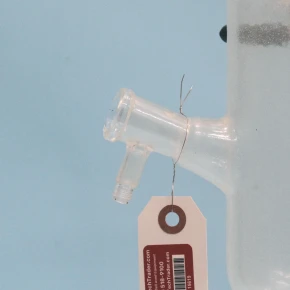
Pay particular attention to the upper opening, lower connection, sidearms, and other stress-sensitive features.
Cracked or otherwise compromised vacuum glassware should not be placed into service.
A compatible glass connection must allow the prescribed gasket or seal to seat correctly.
Damage, deformation, or residue near a sealing surface can interfere with proper assembly.
Compare the outer sleeve with the original component.
Important dimensions may include overall height, body diameter, opening diameter, connection size, and relative position of fittings.
If the laboratory intends to reuse its existing cold finger, the replacement sleeve must accommodate that component and its required seals.
A similar looking outer sleeve should not be considered compatible without dimensional or manufacturer confirmation.
Determine whether the original condenser lid, seals, fittings, and mounting hardware remain usable.
Identifying any missing components before purchase helps avoid delays during installation.
Several generations of BÜCHI Rotavapor equipment have used cold-trap glassware arrangements.
However, the presence of a Style C condenser designation does not automatically mean that every outer sleeve is interchangeable.
Different assemblies can have variations in dimensions, fittings, glass treatment, and related components.
For buyers working with older BÜCHI instruments, the exact replacement part number may be more useful than relying only on a general model designation.
HiTechTrader also provides a Buchi Rotavap Vapor Duct Replacement Guide, which illustrates why identifying the correct glassware generation and connections matters.
There are situations where buying an individual outer sleeve makes financial sense, and others where a complete assembly is a better solution.
In some situations, selecting a different rotary evaporator or complete system may be more practical than rebuilding older equipment.
For guidance on selecting evaporation equipment, explore Lab-Scale vs. Process-Scale Rotary Evaporators.
Used laboratory equipment can offer significant purchasing value, particularly when the buyer needs a specialized replacement component rather than a complete new instrument.
For laboratories maintaining older rotary evaporators, replacement glassware may provide several potential advantages.
Actual cost-effectiveness depends on current pricing, required additional parts, installation effort, and the condition of the existing system.
Read more in Exploring the World of Used Rotary Evaporator Parts.
University research departments often operate rotary evaporators across multiple research projects and teaching laboratories.
Replacing damaged glassware may allow these facilities to preserve existing instrumentation and allocate research funding toward other equipment needs.
Synthetic chemists frequently depend on rotary evaporation for solvent removal after reactions, extraction procedures, and purification steps.
A compatible replacement sleeve can help keep existing cold-trap assemblies available for suitable laboratory workflows.
Research groups preparing intermediates and samples may rely on solvent evaporation equipment for routine processing.
When an existing condenser component requires replacement, sourcing the correct glassware can be an important part of maintaining workflow continuity.
Industrial laboratories may use rotary evaporators during formulation work, quality-control studies, and early-stage chemical development.
Maintaining compatible condenser components helps support continued use of established equipment arrangements.
Instrument technicians and maintenance departments often need replacement components that match an existing assembly precisely.
The used Buchi Style C outer sleeve is particularly relevant to buyers who already know which component requires replacement and want to compare a physical replacement against the original.
A rotary evaporator works as part of a larger system, and condenser performance depends on more than the condition of the glass sleeve.
Depending on the application, a complete system may require:
HiTechTrader offers access to related scientific equipment and parts that may be useful when maintaining or upgrading an evaporation system.
Explore these resources:
Since 1982, HiTechTrader has supplied scientific and laboratory equipment to universities, research organizations, industrial facilities, and other laboratory equipment buyers.
For customers maintaining existing equipment, access to individual components can be just as important as access to complete instruments.
Replacing a damaged component can help preserve a useful piece of equipment and avoid unnecessary spending when the rest of the system remains suitable for service.
To explore additional equipment, visit HiTechTrader.com or browse our laboratory distillation equipment.
It is the outer glass body of a compatible BÜCHI Style C rotary evaporator cold-trap condenser assembly. It works with a separate inner cold finger and other components to form a complete condenser.
No. This offering is for the used cold-trap outer sleeve only. The complete assembly requires additional compatible components, which should not be assumed included.
BÜCHI Style C cold-trap assemblies are designed for compatible rotary evaporation applications, including low-boiling solvent distillation where a suitable cold-finger cooling arrangement is used.
BÜCHI's Style C cold-trap design can use suitable cooling media such as dry ice in its internal cooling element rather than a conventional circulating-water condenser. The complete assembly must be configured and operated according to manufacturer guidance.
The outer sleeve forms the surrounding glass condenser body. The cold finger is the separate internal component that provides the cooling surface in a complete cold-trap assembly.
These BÜCHI families have documented Style C cold-trap configurations, but that does not establish that this exact used outer sleeve fits all of them. The OEM part number, dimensions, glassware generation, and mating components must be verified.
The supplied information does not specify a plastic coating. BÜCHI has offered different versions of Style C cold-trap glassware, including coated variants. Contact HiTechTrader to confirm the construction of this particular component.
A constant-feed connection has not been identified for this listing. Buyers requiring a specific addition joint or continuous-feed arrangement should verify the exact glassware configuration before purchasing.
Potentially, yes. When the rest of the equipment remains functional and the replacement sleeve is fully compatible, replacing the outer glass component may be more economical than replacing the complete assembly or instrument.
No. Cracked or compromised laboratory vacuum glassware should not be used. Proper inspection and appropriate replacement are necessary before returning the condenser to operation.
This component is offered in used condition. Contact HiTechTrader for current photographs, available inspection information, pricing, and confirmation of included accessories.
HiTechTrader carries specialized scientific equipment and replacement glassware. Browse our laboratory glassware category and read our guide to used rotary evaporator parts.
A laboratory rotary evaporator is an investment in research capability. When one glass component becomes damaged, it doesn't always make sense to replace the entire instrument.
The used Buchi Rotavap Style C Cold Trap Outer Sleeve offers a potential replacement solution for buyers maintaining compatible cold-trap condenser assemblies.
Its value lies in providing the specific external glass component needed for the right system, without requiring the buyer to purchase unrelated equipment unnecessarily.
If your laboratory already has a compatible inner cold finger, lid, seals, and related hardware, this sleeve may be the part needed to complete your maintenance project.
Don't replace the entire Rotavap until you've checked the glassware.
Contact HiTechTrader to request the current price, availability, photographs, connection dimensions, and shipping information for this used Buchi condenser outer sleeve.
For the most useful compatibility review, have your Rotavap model number, original condenser part number, and photographs or measurements of the existing glassware available.
Call: 609-518-9100
Email: sales@hitechtrader.com
Explore: Shop Laboratory Glassware and Replacement Components
HiTechTrader — Serving Scientific Equipment Buyers Since 1982.


